Bursts, not mean shifts
Testing temporal bursts on an immersive hardware-RNG platform.
Recorded edition of the talk given at The Science of Consciousness 2026 (15 October). Numbers updated to 29 October 2026.
Cumulative means cancel episodic deviations; burst detection isolates them
The Effect Size Problem
Canceling signed means
Decades of micro-PK averaged signed bits. Effect sizes came out microscopic (h = 0.0006) because alternating excursions cancel to zero.
Unsigned Mean |z|
Preserving volatility
Primary endpoint. Amplitude away from chance, regardless of sign. Effect size becomes volatility, not drift.
Thresholded Bursts
Tail clustering in time
Secondary endpoint. Counts 60-second periods with |z| ≥ 1.96. Powered for concentrated bursts, not smeared drift.
Three results this design starts from
1. FieldREG (1996–1998)
Academic venues null
Passive ambient fields. Tucson II (1996) p = 0.387; all academic venues pooled p = 0.96 (FieldREG II, Tables 1b and 2b).
2. PortREG (2000)
Fixed N, no confirmation
3 labs, 227 operators, 250 series per lab fixed in advance. HI–LO z = 0.60 vs prior 3.81. Operator-started vs timer-started trials: no difference.
3. Photonic QRNG (2018–2021)
Null on the pre-specified mean
Maier et al. 2018 (12,571); Dechamps et al. 2021 (>12,000). The post hoc oscillation was matched by chance on reanalysis (Grote 2018).
4. Ionosphere (2026)
Immersion as the variable
The stream is the room. Unsigned |z| and bursts replace canceling means. Circular shifts keep serial dependence.
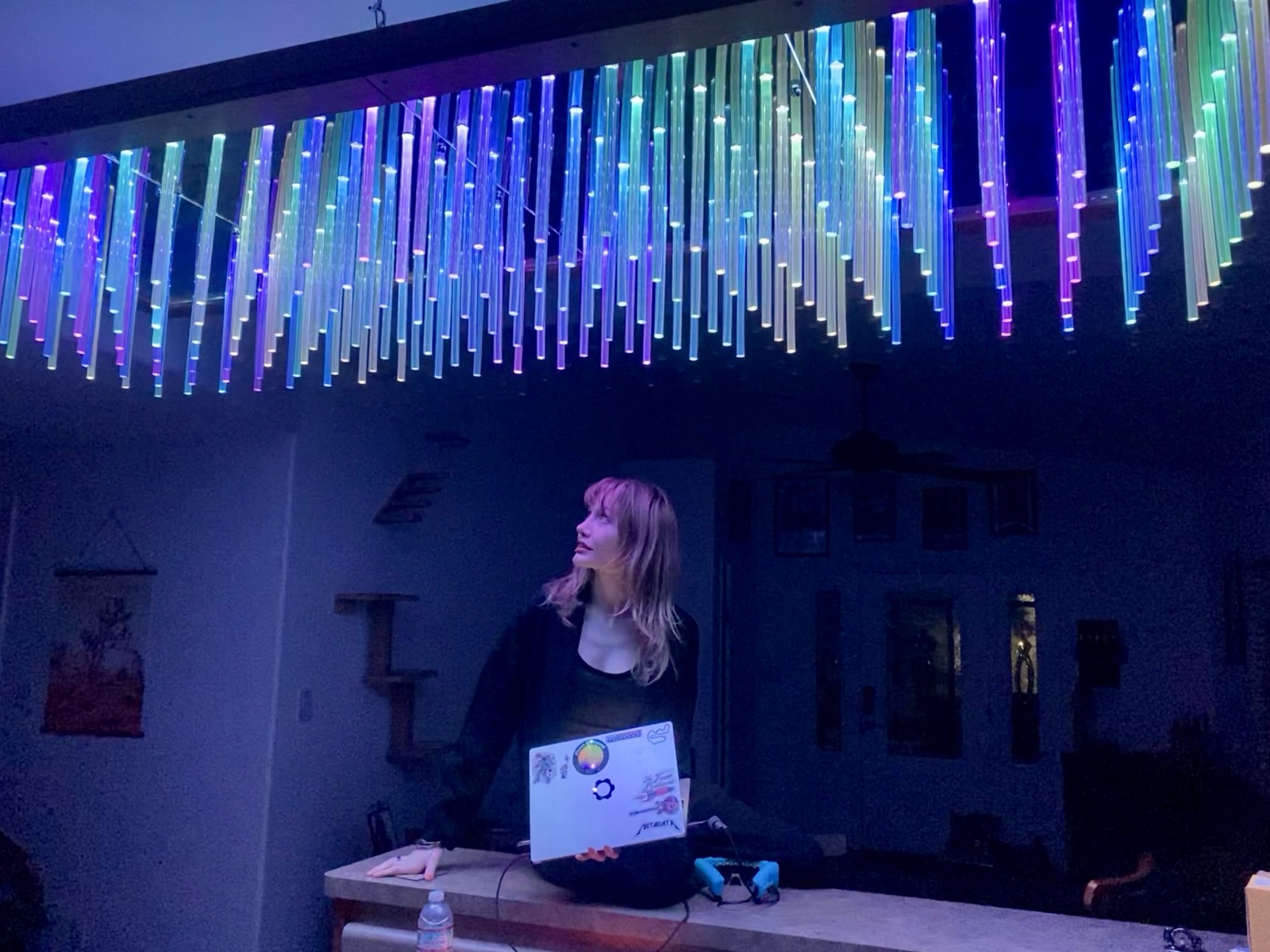
Room-Scale Capability
192-rod chandelier & 1,000+ LED array
Solenoid chimes and addressable LEDs driven live by avalanche-diode entropy.
Pre-committed Solo Workstation
Extended display, darkened room
Visual feedback only; no audio in these runs. Heat and proximity to the device remain (slide 13).
The Instrument
Locked at 10,400 bytes per period
Avalanche-noise hardware RNG (TrueRNG v3); 10,400 bytes every 60-second period; bit-count z per period. Post-processing: FILL.
What the operator sees: departure from chance tears the pattern, coherence lets it settle
Clues that motivated sealing the design

Memorial balloon release
z = 4.04 · peak excursion
Dad's first birthday after his passing. Our highest reading, minutes after the balloon went up.
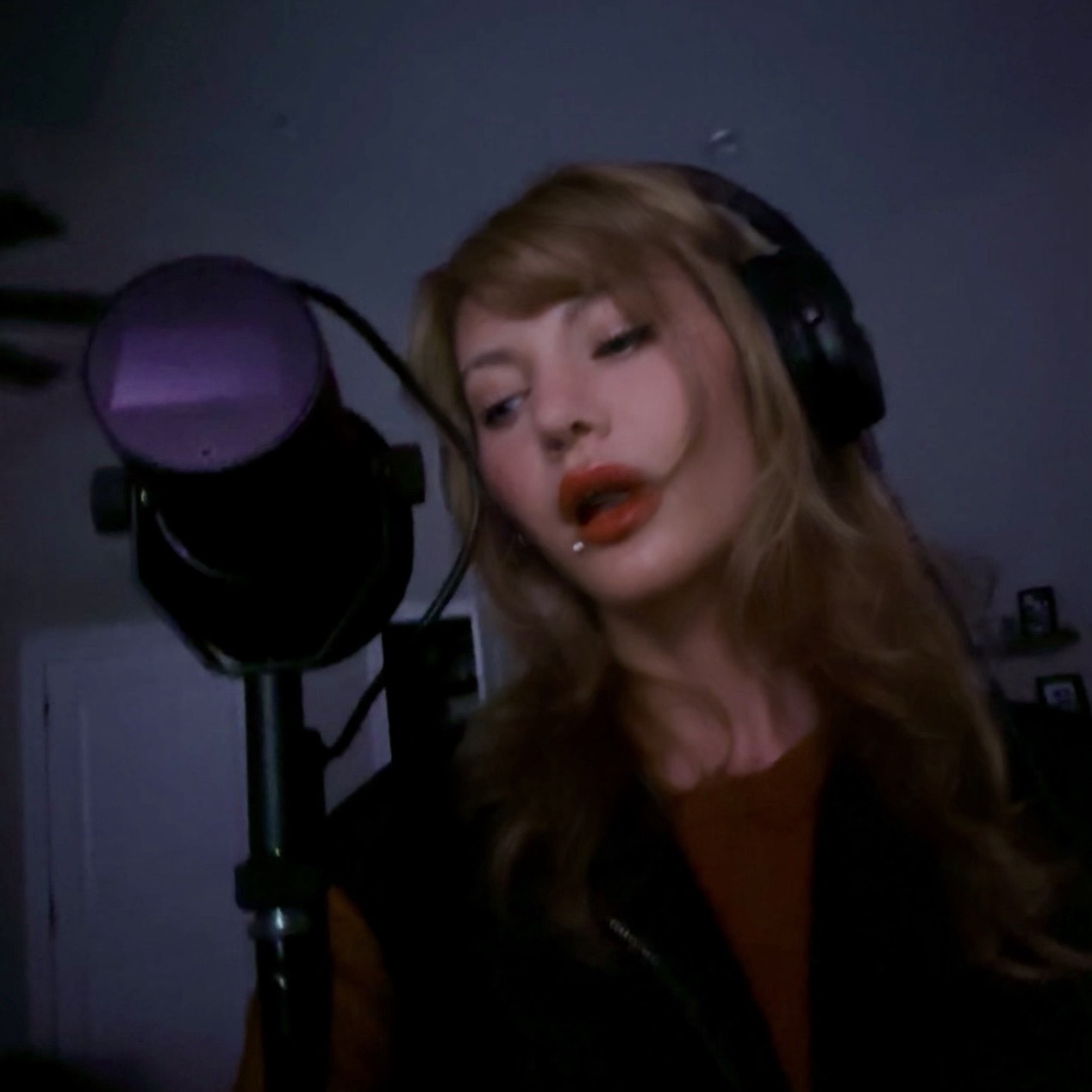
Musical flow
Singing & piano
Across focus periods, z tended to run high while singing or playing piano. An impression, not a score; the state logger now stamps these.

Autumn Lights Festival
z = 3.31 when meditators arrived
4 days, 3,222 periods, aggregate null. One transient spike, uncorrected p < 0.001.
July 4 paired run
9 windows: 10.3% bursts vs 3.9%, p = 0.007. Simultaneous PRNG control flat.
The confirmatory turn
Noticed after the fact: clues that motivated the design, not evidence. Every window, seed and analysis was then fixed before the next session.
Hidden focus schedules, SHA-256 commitments, and the channels still open
Schedule & Windows
Hidden 15-min blocks + K=5 buffer
6 h (380 periods) or 3.3 h (200 periods) runs. Operator told of a window only at its onset. 5 periods after each window dropped from baseline.
Pre-Commitment & Limits
SHA-256 committed in-repo
76 schedule hashes committed before collection; no seed reused. No external registry entry. Number of runs never fixed: the pool is interim.
| Channel (decision augmentation theory) | Status | How |
|---|---|---|
| Window placement inside a session | Closed | Generated from a seed, hashed before the run, hidden from the operator |
| Session start time | Open | Chosen by the operator; fixed starts are the sealed follow-up |
| Number of runs, stopping | Open | Never fixed; pooled figures reported at interim looks |
| Inclusion & analysis rules | Fixed per run | Endpoint, mask, buffer, burst threshold, test fixed before each run; gate diagnostic only, never excludes. The run is the unit of analysis. |
Same rig, schedule shape and analysis. Only the operator changes
| Rung / arm | Question it answers | Status (29 Oct 2026) |
|---|---|---|
| 1. PRNG, no windows | Does the pipeline make structure from software noise? | Run; flat |
| 2. PRNG + schedule + alerter | Do host events at window transitions manufacture anomalies? | 2 windowed runs (6 in the stratum) |
| 3. Unattended TrueRNG + schedule | Does the device show the excess with nobody in the room? | 4 runs since the conference; target 15–20 |
| 4. Attended human solo | Primary arm: operator immersed in live visual feedback | 39 runs |
| 5a. Human + two language-model companions | Does a text exchange during windows change anything? Companions see live z, never the schedule | 9 runs · Δ = +0.017, p = 0.25 |
| 5b. Language model as sole operator | Procedural null under its own geometry (4 × 5-min windows, 90 s gaps, stream off) | 5 runs · Δ = −0.035, p = 0.80 |
Dependence-preserving null, fixed before each run
Primary endpoint
Mean |z| in-window vs. baseline
The committed window mask is shifted around the run's own z series. 20,000 sampled shifts in the pooled script; exact enumeration of every distinct placement in each run report. One-tailed for enrichment. Run-stratified, never concatenated.
Secondary endpoint
Placement test on |z| ≥ 1.96
Burst-rate difference against the circular-shift null; Mantel-Haenszel odds ratios across runs.
Between arms
Run-level label permutation
Runs are independent units; within-run dependence stays inside each run's statistic. Reported with the contrast on slide 10.
Attended solo arm, then the two controls that would tell it from the pipeline
| Stratum | Runs | In-win | Base | Δ | p |
|---|---|---|---|---|---|
| Human solo, conference (15 Oct) | 36 | 4,923 | 5,911 | +0.0314 | p = 0.0062 |
| Human solo, 29 Oct | 39 | 5,148 | 6,214 | +0.0344 | p = 0.0020 |
| with the 11 planted-data runs left in | 45 | +0.0575 | p = 0.0002 | ||
| gate-passing subset (sensitivity) | 25 | 3,353 | 4,014 | +0.0124 | p = 0.2278 |
| Unattended TrueRNG + schedule | 4 | 299 | 404 | +0.0030 | p = 0.49 |
| PRNG + schedule | 2 | 300 | 408 | +0.1413 | p = 0.0224 |
Solo vs. unattended
Difference +0.031; run-label permutation p = 0.49. Four runs cannot bound it: per-run sd 0.087, so 15–20 are needed.
Solo, run-level bootstrap (after the fact)
95 % interval [+0.008, +0.065], 20,000 resamples. Burst odds ratio 1.52; placement p = 0.0002.
PRNG + schedule
Bytes verified independent. What the shift test gives on a known null with two runs. The pipeline's null at 2, 36 and 39 runs is not yet simulated.
8 of 69 clean windowed runs clear uncorrected p < 0.05 on the shift test (3.5 expected)
| Run | Arm | Periods (in / base) | In-win |z| | Base |z| | Enrichment | Shift p | Burst OR (Fisher two-sided p) |
|---|---|---|---|---|---|---|---|
| SOLO-25 | solo (6.3 h) | 150 / 179 | 0.9497 | 0.6801 | +0.2696 | 0 of 378 placements (floor 1/379) | 11.31 × (p < 0.0001) |
| PRNG-SCHED-1 | control (6.7 h) | 150 / 202 | 0.9228 | 0.7266 | +0.1962 | p = 0.0383 | 1.93 × (p = 0.148) |
Does live coupling add anything on top of the immersion? So far, no
The contrast
Balanced within run
Half the windows couple the glitch to the live stream; half hold it constant at matched intensity. Condition unannounced; the live z was visible in both.
Result
No incremental effect
ON minus OFF +0.018 across 39 runs. Per-run two-sided tests: 1 of 39 below 0.05.
What it tests
Contingency, with immersion held constant
OFF removes the live coupling, not the room. The contingency of the feedback did not show.
If the excess is real, the data cannot yet say where it comes from
Attribution
Operator + display + instrument
Attention, luminance, body heat and EM near a USB device, or the device itself. Not isolated; and the pipeline is not yet cleared.
One person, three roles
Operator, experimenter, analyst
A design the field's own methodologists say cannot separate participant, experimenter and analyst effects.
Experimenter effect
Performance pressure
Wanting a high z brought anxiety, the opposite of absorption. Multi-TBI short-term memory: windows forgotten mid-run.
Rigor vs readiness
Fixed clocks
Fixed clocks handled timing and demanded focus on command. Next: readiness measured before the session.
Three rows; the full table with page-cited cells is on the site
| PEAR REG (1997) | PortREG (2000) | GCP (2008, 2017) | Transparent Psi (2023) | Ionosphere (2026) | |
|---|---|---|---|---|---|
| Pre-commitment | Intention recorded before each run; no registry | Primary criterion and 250 series per lab fixed by three labs | Events registered, sometimes after they occur | Registered Report, consensus protocol, OSF | Schedule hash-committed before every run; number of runs never fixed; no registry |
| Controls | Unattended calibration, 5.8 M trials; pseudorandom sources null | Concurrent unattended calibrations | XOR; resampling; clone database on request | Audit and tamper-evident software; no source arm | PRNG with and without schedule; unattended runs, schedule armed; per-run instrument check |
| Replication | Internal; the external test did not confirm | Is the replication; not confirmed | None independent; internal reanalysis favours an experimenter effect | Ten laboratories, nine countries | None. One operator, one rig, no ethics board, raw runs not public |
Written before the data, so it cannot be renegotiated later
Against the hypothesis
Failure at a fixed N
Primary contrast failing at a fixed number of runs, then powered independent replications failing. This corpus never fixed N; the sealed follow-up does.
Against the apparatus
Unattended runs match
If 15–20 unattended scheduled runs reproduce the excess at attended rates, it belongs to the rig or the room, not to attention.
Against interim findings
Pool regresses to null
If the attended pool regresses to baseline as it grows, the early signal was fluctuation. Equally publishable.
Owed first
Null-ensemble calibration
The frozen pipeline on thousands of simulated PRNG sessions under the committed schedules: the shift test's null at 2, 36 and 39 runs.
Only what is already written down
Grant proposal, submitted August 2026
Hybrid EEG–RNG feedback for amplifying mind–matter interaction effects
Host ICRL; 36 months; EEG-only, RNG-only and hybrid sessions with meditators; OSF registration before data. Decision pending.
Sealed follow-up (outline)
Fixed, pre-committed session starts
Start times hidden from the operator, three operators, sealed cards, a third-party analyst. Fixes the two open channels on slide 7.
Language-model operator (outlines)
Specificity control
A non-human operator inside the sealed protocol, and a separate all-machine coupled / blind / sham design. Five exploratory runs pooled flat.
Livestream audience arm (built)
Remote marks against the hidden schedule
Viewers mark felt window onsets and absorbed states in hash-chained logs. No counted run yet.
Projects, collaborations, and open resources
The Synapse

thesynapse.co
Mason: Tech lead, program planner
Dani: Part of Synapse
Aegix Linux

aegixlinux.org
Mason & Timothy: Co-founders
Open-source deterministic OS
Ionosphere Platform

ionospherelabs.com
Commitment record • Live stream
76 schedule commitments
Research Portal

masonborchard.com
Conference papers • Slide decks
Statistical methods notebooks
Sources, with the corrections made since the conference
Bancel, P. A. (2017). Searching for global consciousness: A review of data and methods. Explore, 13(2), 94–101.
Bösch, H., Steinkamp, F., & Boller, E. (2006). Examining psychokinesis: The interaction of human intention with random number generators--A meta-analysis. Psychol. Bull., 132(4), 497–523.
Dechamps, M. C., Maier, M. A., Pflitsch, M., & Duggan, M. (2021). Observer-dependent biases of quantum randomness. JAEX, 1(1–2), 114–155.
Dobyns, Y. H. (1996). Selection versus influence revisited: New method and conclusions. JSE, 10(2), 253–268.
Gelman, A., & Loken, E. (2013). The garden of forking paths. Working paper, Columbia Univ.
Grote, H. (2018). Commentary: Intentional observer effects on quantum randomness. Front. Psychol., 9, 1350.
Harris, K. D. (2020). A shift test for independence in generic time series. arXiv 2012.06862.
Yuan, A. E., & Shou, W. (2024). A rigorous and versatile statistical test for correlations between stationary time series. PLOS Biology, 22(8), e3002758.
Herrero-Collantes, M., & Garcia-Escartin, J. C. (2017). Quantum random number generators. Rev. Mod. Phys., 89(1), 015004.
Jahn, R. G., Dunne, B. J., Nelson, R. D., Dobyns, Y. H., & Bradish, G. J. (1997). Correlations of random binary sequences with pre-stated operator intention. JSE, 11(3), 345–367.
Jahn, R. G., Dunne, B. J., Bradish, G. J., Dobyns, Y. H., Lettieri, A., Nelson, R. D., Mischo, J., Boller, E., Bösch, H., Vaitl, D., Houtkooper, J., & Walter, B. (2000). Mind/Machine Interaction Consortium: PortREG replication experiments. JSE, 14(4), 499–555.
Kekecs, Z., et al. (2023). The Transparent Psi Project. Royal Society Open Science, 10(10), 191375.
Levin, M. (2015). Coupling of rational agents to quantum processes. US Patent 9,189,744 B2.
Maier, M. A., Dechamps, M. C., & Pflitsch, M. (2018). Intentional observer effects on quantum randomness. Front. Psychol., 9, 379.
May, E. C., Utts, J. M., & Spottiswoode, S. J. P. (1995). Decision augmentation theory. J. Parapsychol., 59(3), 195–220.
Nelson, R. D., et al. (1996). FieldREG anomalies in group situations. JSE, 10(1), 111–141.
Nelson, R. D., et al. (1998). FieldREG II: Consciousness field effects. JSE, 12(3), 425–454.
Pallikari, F., & Boller, E. (1999). A directional test for the investigation of PK on RNG. JSE, 13(1), 25–40.
Radin, D. I. (1993). Testing the plausibility of psi-mediated computer system anomalies. JASPR, 87(3), 291–312.
Radin, D. I., & Nelson, R. D. (1989). Evidence for consciousness-related anomalies in random physical systems. Found. Phys., 19(12), 1499–1514.
Scargle, J. D. (2002). Was there evidence for global consciousness? JSE, 16(4), 579–591.
Simmons, J. P., Nelson, L. D., & Simonsohn, U. (2011). False-positive psychology. Psychol. Sci., 22(11), 1359–1366.
Tellegen, A., & Atkinson, G. (1974). Openness to absorbing experiences. J. Abnorm. Psychol., 83(3), 268–277.
Wilson, D. B., & Shadish, W. R. (2006). On blowing trumpets to the tulips. Psychol. Bull., 132(4), 524–528.